The Power of Purple: Potassium Permanganate in Gas Phase Filtration
Key Takeaways
- Potassium permanganate media plays a critical role in many gas phase filtration systems.
- It helps remove contaminants that activated carbon alone may not effectively address.
- Applications range from odor control and corrosion prevention to indoor air quality improvement.
- Potassium permanganate media is often used alongside activated carbon rather than as a replacement.
- In many systems, only a small amount of potassium permanganate media can significantly improve performance.
- Choosing the right media combination is often more important than simply adding more filtration media.
Potassium Permanganate Is the Swiss Army Knife of Gas Phase Filtration
Activated carbon is often the first media people think about when discussing gas phase air filtration. Its broad adsorption capabilities make it a valuable solution across many industries and applications.
However, some of the most effective air filtration systems rely on another technology working behind the scenes: potassium permanganate media.
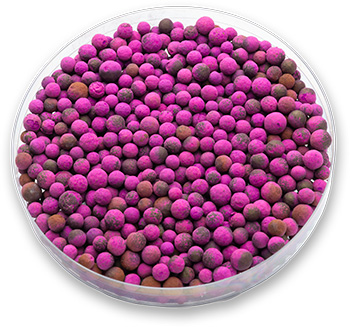
Often recognized by its distinctive purple color, potassium permanganate has earned a reputation as one of the most versatile tools available for gas phase filtration. While it is not the answer for every application, its ability to target specific contaminants has made it a staple in odor control, corrosion prevention, and indoor air quality improvement systems worldwide.
What Is Potassium Permanganate Media?
Potassium permanganate (KMnO4) is a powerful oxidizing compound that is commonly impregnated onto activated alumina to create filtration media.
Without going too deeply into chemistry, the important takeaway is that potassium permanganate media is designed to address contaminants that may not be effectively controlled by activated carbon alone.
Rather than competing with carbon, potassium permanganate often works alongside it as part of a complete gas phase filtration strategy.
More Than Just Odor Control
Many people associate purple media exclusively with odor removal. While odor control remains one of its most common applications, its usefulness extends much further.
Odor Control Applications
Potassium permanganate media is highly effective against many odor-causing compounds, including:
- Hydrogen sulfide
- Mercaptans
- Various sulfur-based compounds
- Other nuisance odors commonly found in industrial and municipal facilities
This makes it a popular choice for wastewater treatment plants, lift stations, composting operations, and other odor-sensitive environments.
Corrosion Control and Asset Protection
Airborne contaminants do more than create unpleasant odors. Many gases can contribute to corrosion of sensitive electronics, instrumentation, and control systems.
Facilities commonly use potassium permanganate media to help protect critical equipment in:
- Wastewater treatment facilities
- Pulp and paper mills
- Manufacturing plants
- Industrial process environments
By removing corrosive gases from the air stream, facilities can often improve equipment reliability and reduce maintenance costs.
Indoor Air Quality Applications
Potassium permanganate media is also used in applications where air quality directly impacts occupants.
Examples include:
- Hospitals
- Airports
- Commercial buildings
- Veterinary facilities
- Educational institutions
In these environments, gas phase filtration can help improve overall indoor air quality while addressing specific airborne contaminants.
Additional Specialty Applications
The versatility of potassium permanganate media has led to its use in numerous niche applications, including:
- Food and beverage manufacturing
- Consumer air purification products
- Laboratory environments
- Specialty industrial processes
Why Not Just Use Activated Carbon?
Activated carbon remains one of the most valuable tools in gas phase filtration. In many applications, it may be all that is needed.
However, different contaminants respond differently to various filtration technologies.
Some contaminants are more effectively addressed through oxidation mechanisms, while others are better suited for adsorption on activated carbon.
That is why many high-performance filtration systems combine multiple media types.
Examples include:
- Activated carbon paired with a potassium permanganate polishing layer
- Blended media formulations
- Multi-stage filtration systems designed for complex contaminant streams
The goal is not to use more media. The goal is to use the right media.
A Little Purple Can Go a Long Way

One of the most common misconceptions about potassium permanganate media is that an entire filtration vessel must be filled with it to make a meaningful difference.
In reality, many successful systems use relatively small amounts of purple media strategically.
Blended Media Solutions
PureAir offers several blended media options that combine the strengths of multiple technologies, including:
These blended solutions can help facilities address a broader range of contaminants while optimizing media utilization.
Polishing Layers and Targeted Treatment
In some applications, potassium permanganate media is used as a polishing layer that targets specific contaminants after primary filtration has already occurred.
This targeted approach can significantly improve overall system performance without requiring large quantities of media.
While some applications may require vessels filled entirely with PureAir 4, PureAir 8, or PureAir 12 media, many systems achieve excellent results with only a portion of the filtration system dedicated to potassium permanganate-based media.
How Do You Know If You Might Need Purple Media?
Your facility may benefit from potassium permanganate media if:
- Odors persist despite existing filtration systems
- Corrosion continues to affect electronics or control equipment
- Sensitive instrumentation requires additional protection
- Indoor air quality goals are not being achieved
- Multiple contaminants are present in the air stream
A detailed contaminant analysis can help determine whether potassium permanganate, activated carbon, or a blended media solution is the best fit.
The Swiss Army Knife of Gas Phase Filtration
Potassium permanganate media has remained a trusted filtration solution for decades because of its versatility. From odor control and corrosion prevention to indoor air quality improvement and specialty industrial applications, it continues to solve challenges that activated carbon alone may not fully address.
The most effective gas phase filtration systems are rarely about choosing one media technology over another. Instead, they combine the right technologies to address the specific contaminants present. That’s why potassium permanganate remains the Swiss Army knife of gas phase filtration: adaptable, versatile, and capable of enhancing performance across a remarkably wide range of applications.
If you’re evaluating an air filtration challenge involving odors, corrosion, or complex contaminant streams, the Pure Air Filtration team can help identify the right media strategy for your application. Contact us to learn more.
MYTH VS. REALITY
Myth: Potassium permanganate media is only used for odor control.
Reality: It is widely used for corrosion control, electronics protection, indoor air quality improvement, and specialty industrial applications.
Myth: You need an entire vessel of purple media to make a difference.
Reality: Many successful systems use potassium permanganate as a polishing layer or as part of a blended-media solution.
Myth: Activated carbon can solve every gas phase filtration challenge.
Reality: Different contaminants require different removal mechanisms. Some applications benefit from combining multiple media technologies.